Water entry keeps returning
Staining or dampness reappears after previous repairs, suggesting the roof covering, flashings, penetrations and drainage path need to be considered together.
Roof renovations that begin with the existing roof, the pathways water can take and the junctions that protect the home—not the new covering alone.
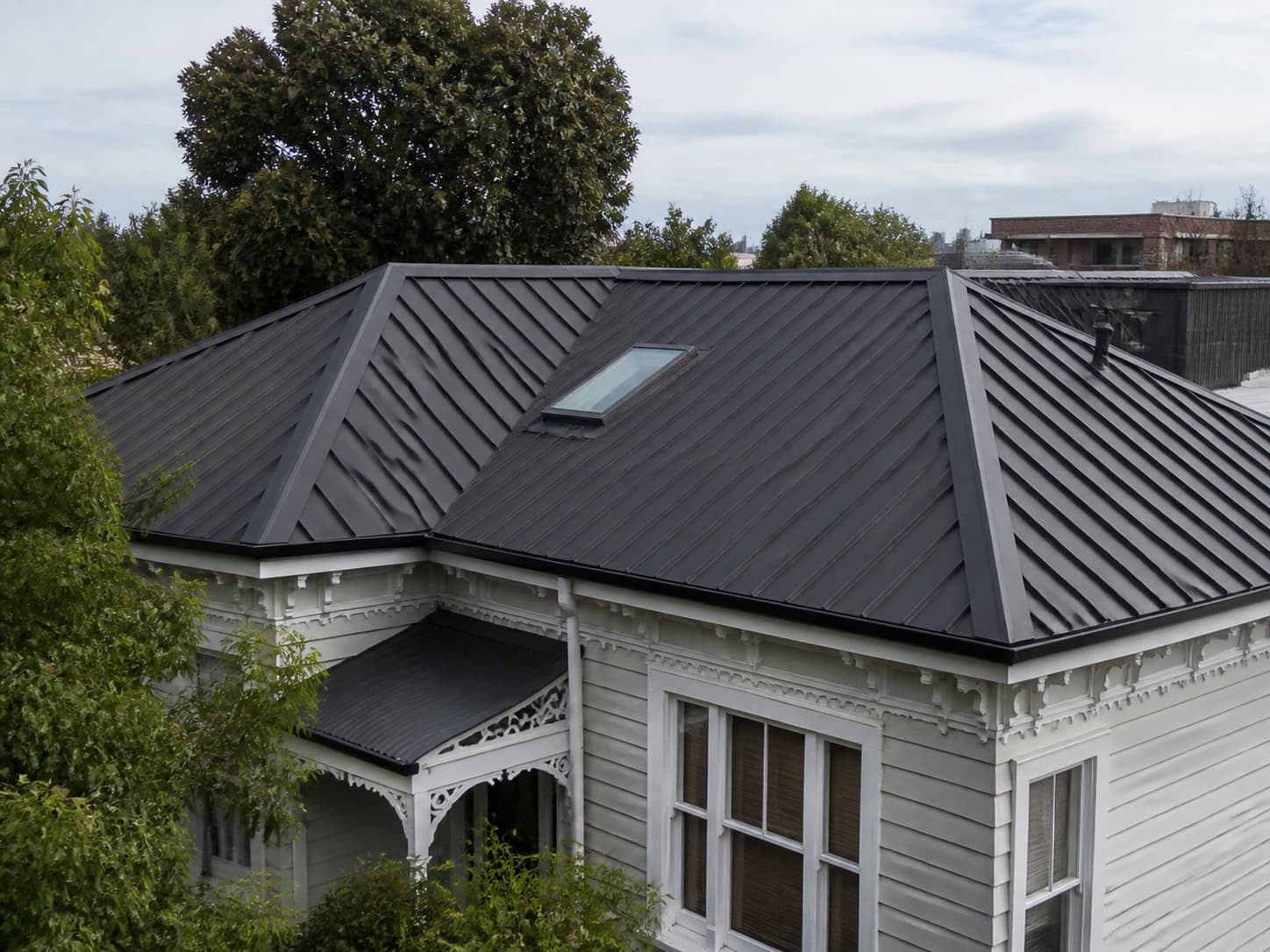
Temporary visual — approved project photography required
What needs attention?
A broader roof review becomes useful when recurring symptoms, widespread ageing or connected roof details make another isolated repair difficult to assess in context.
Staining or dampness reappears after previous repairs, suggesting the roof covering, flashings, penetrations and drainage path need to be considered together.
Cracked or displaced tiles, worn coatings, corroded metal, ageing fixings or repeated patching appear across more than one area of the roof.
Valleys, ridges, gutters, penetrations or adjoining roof forms create connected work that is difficult to resolve one detail at a time.
A renovation, roof-mounted equipment or changes below the roof create interface, access or sequencing questions that should be resolved within one scope.
What the work can include
The final work depends on the roof form, material and condition. Once those are better understood, the following elements can be coordinated within the agreed renovation scope.
Reviewing visible roof surfaces, junctions, drainage, signs of deterioration and accessible areas around the home to identify the questions that shape the work.
Defining which roof areas or components may be retained, repaired or replaced rather than assuming the same treatment is appropriate everywhere.
Coordinating the agreed tile, metal or other roof-covering work with the condition of the accessible supporting elements and preparation it requires.
Bringing the exposed junctions around walls, changes in roof form, vents, flues and other penetrations into the roof scope.
Considering the roof edges, gutters, outlets and the way roof water is collected where those elements form part of the agreed work.
Coordinating access, weather-sensitive stages, trade interfaces and final visible checks before the completed roof work is handed over.
What shapes the project
Roof timing and cost are strongly affected by the existing construction and the practical method of working safely above an occupied home. Concealed conditions may only become clear as work progresses.
Pitch, valleys, adjoining roof areas and the existing tile or metal system influence the work method, compatible details and amount of preparation required.
The internal location of a stain may not sit directly below the entry point, so symptoms should not be treated as a complete diagnosis of the roof.
The condition below the visible covering cannot always be confirmed in advance and may change the repair, preparation or sequencing required once exposed.
Solar panels, antennas, vents, flues, skylights and mechanical equipment can affect access and may require coordination with appropriately qualified trades.
If older roof or accessory materials are suspected to contain hazardous material, identification and any required handling need to be addressed by an appropriately qualified specialist before affected work proceeds.
Scaffolding or other access needs, protection of the home, neighbouring conditions and suitable weather windows all influence the construction sequence.
How the process starts
We discuss what you have noticed, previous roof work, the property suburb, available access and when you hope to begin.
We review the visible roof condition, relevant internal symptoms, roof edges, penetrations, drainage and the practical constraints that can be assessed at the time.
We define the agreed work and identify any further investigation, product decisions, access planning or specialist coordination needed before construction.
We coordinate the agreed roof work around access and suitable conditions, then resolve the final details before handover.
Before you enquire
Roof form, material, age, access and concealed conditions all affect what can be retained, repaired or replaced. These answers are a starting point rather than a diagnosis.
Not always. The extent and pattern of deterioration, compatibility of existing materials, history of repairs and condition of connected details all help determine whether repair, partial replacement or a broader renovation should be considered.
Visible symptoms provide useful clues, but water can travel along roof components before appearing inside. The source should not be assumed from the stain location alone, and some investigation may be needed before an appropriate scope is defined.
A change in roof-covering system can affect supporting requirements, junction details, drainage, appearance and other project considerations. Its suitability needs to be reviewed for the individual home rather than treated as a direct material swap.
Their location and fixing method need to be understood early. Temporary removal, protection, reinstatement or other work may require coordination with appropriately qualified providers and should be identified within the project scope.
Rain, wind, temperature and drying requirements can affect when exposed or weather-sensitive stages can proceed. The sequence should allow for protection of the home and may need to change when conditions are unsuitable.
Tell us the property suburb, roof material if known, where you have noticed leaks or deterioration, any previous repairs, existing solar panels or roof equipment and when you hope to begin. Photos of visible symptoms can also help describe the issue.
Start with the roof as it is now
Include the property suburb, roof type if known, visible deterioration or water-entry symptoms, any existing roof-mounted equipment and when you hope to begin.